
Ask an Endries Expert: Fasteners in Data Center Raised Floor and Seismic Systems
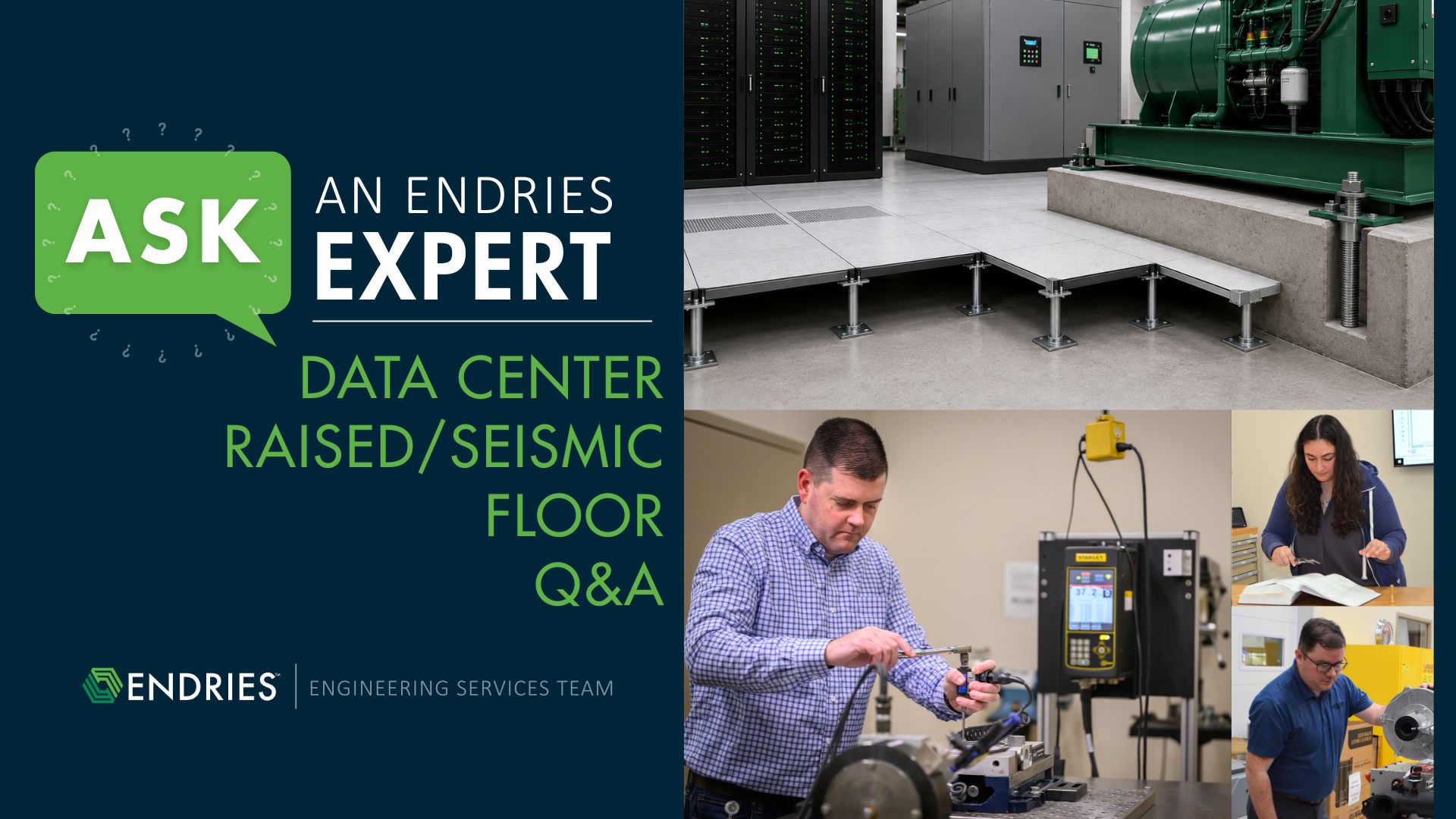
In data center raised floor and seismic systems, fasteners play a direct role in anchoring heavy equipment, supporting framing, and helping structural connections resist movement over time. Anchor bolts, structural bolts, nuts, washers, and related hardware must be selected around load, base material, equipment layout, installation requirements, and environmental exposure. In this Ask an Endries Expert article, we look at how controlled fastener selection, documentation, and sourcing practices can support inspection readiness, reduce installation delays, and help OEMs keep critical systems stable and serviceable.
What fasteners support data center raised floor and seismic systems?
Anchor bolts, structural bolts, nuts, washers, and related hardware are commonly used to secure heavy equipment, support framing, raised floor pedestals, and structural connections in data center environments.
In these applications, fasteners are not just holding components in place. They help transfer load into the base structure and resist movement from equipment operation, service activity, or seismic events. For generators, UPS units, cooling systems, and support structures, the right anchoring approach helps the installed system remain stable and serviceable over time.
What drives fastener selection for these applications?
Selection is driven by the load the joint needs to carry, the base material, the equipment layout, and the type of movement the connection may need to resist. Part grade, diameter, embedment depth, edge distance, spacing, and installation torque all affect how the fastened joint performs.
Material and finish selection also matter. In long-life installations, corrosion can reduce joint integrity over time, especially in mechanical rooms, utility areas, or environments exposed to moisture or other contaminants. Finishes such as hot-dip galvanizing, zinc flake coatings, or stainless steel may be considered depending on the exposure, application, and specification requirements.
How do fasteners affect compliance and inspection in data centers?
Fasteners support inspection readiness when the approved part, installation method, torque value, and documentation are clearly defined. Inspectors and project teams may need to confirm that the correct hardware was used, that anchoring follows the approved plan, and that installation practices match site or code requirements.
This is where consistency matters. If substitutions are made late or torque values are not documented, teams may lose time confirming whether the installed hardware still meets the requirement, or worse, install incorrect fasteners or use incorrect torque, leading to failures. A controlled part list, clear specifications, and traceable documentation help reduce avoidable questions during installation and approval.
How should OEMs manage sourcing for these fasteners?
OEMs should manage these parts around approval control, documentation, and project timing. The more critical the connection, the more important it is to keep the approved hardware clearly identified and consistently available.
A practical sourcing approach should include:
- Controlled approved part lists
- Documentation matched to each fastener
- Supply planning aligned to project schedules
- Clear labeling for installation teams
- Replenishment planning to avoid gaps during install
This helps reduce last-minute substitutions, missing documentation, and installation delays.
What should teams keep in mind?
Raised floor and seismic-related fasteners support structural stability, equipment anchoring, and long-term installation consistency. The safest language is not that fasteners “ensure compliance,” but that the right fasteners, documentation, and installation practices help support compliance, inspection readiness, and reduced risk over the life of the system.