
Ask an Endries Expert: Fasteners in Data Center Racks and Server Cabinets
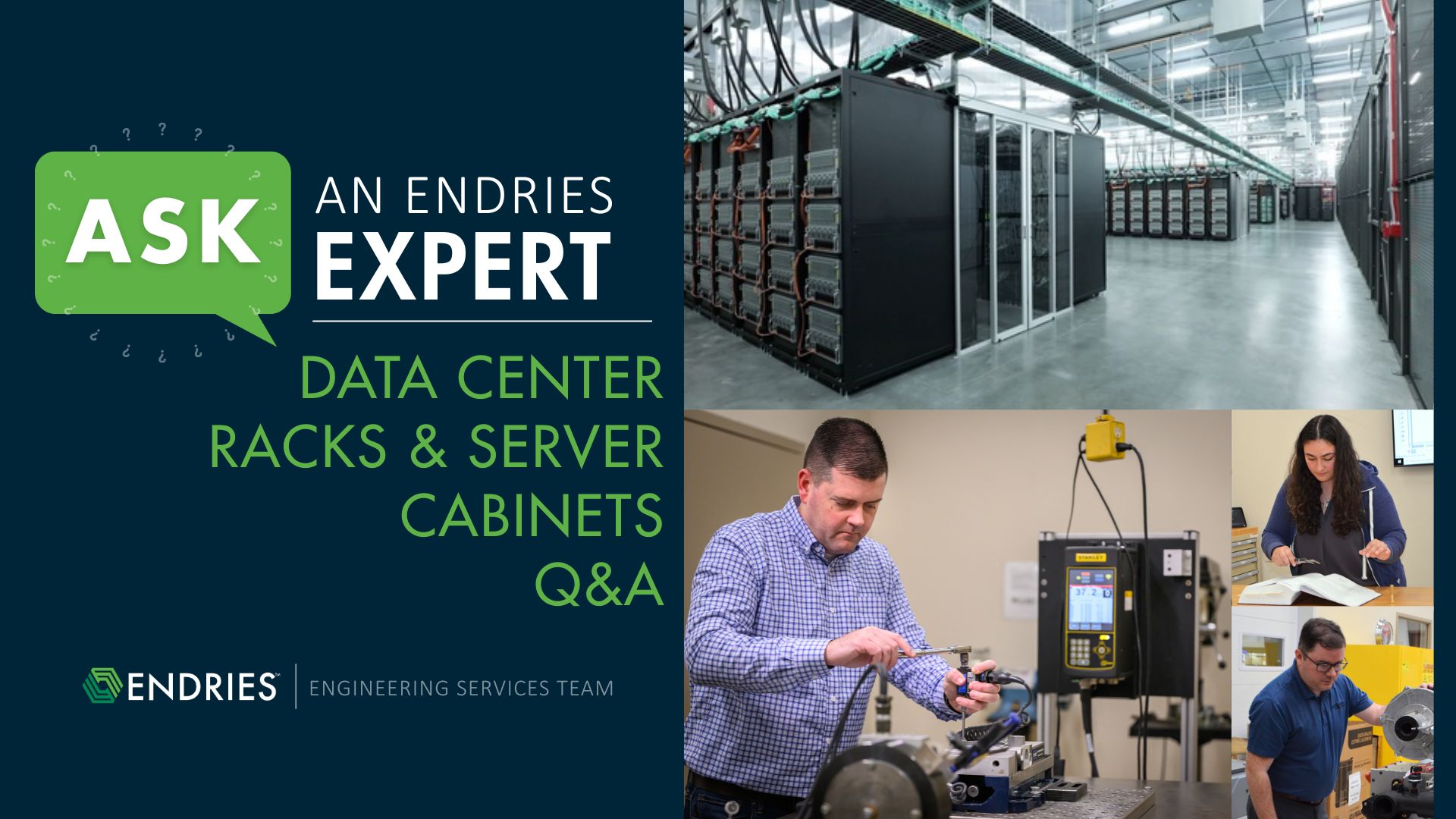
In data center racks and server cabinets, fasteners play a direct role in assembly speed, service access, and long-term consistency. Rack screws, cage nuts, machine screws, bolts, washers, nuts, captive screws, and related hardware must be selected around repeat use, drive style, head clearance, panel access, and hardware standardization. In this Ask an Endries Expert article, we look at how controlled part lists, consistent hardware choices, and organized sourcing practices can help OEMs reduce tool changes, limit part mix-ups, support cleaner service work, and keep repeated rack and cabinet builds moving efficiently.
What fastener needs stand out for data center racks and server cabinets?
Racks and server cabinets use many fasteners that are handled repeatedly during assembly, equipment changes, and field service. Rack screws and cage nuts mount servers, rails, and accessories. Machine screws, bolts, washers, and nuts hold frames, doors, brackets, and panels. Thread-forming screws may be used for sheet metal components, while captive screws help keep service panels attached during maintenance. Often forgotten or overlooked components are hinges, handles, locks, casters, and leg levelers.
The main issue is not only strength. It is repeatability. Hardware needs to support clean assembly, reliable access, and consistent service across tight, high-density layouts.
What drives fastener selection in this category?
Repeat use is a major driver. Threads need to hold up through installation, removal, and reinstallation. Drive style affects assembly speed and service work. Head style affects clearance where racks, rails, panels, and cable pathways are tightly packaged.
Standardization also matters. Reducing unnecessary variation in screw sizes, drive types, and hardware styles helps lower the chance of mix-ups and reduces tool changes during assembly or service.
How do fasteners affect service time in server cabinets?
Fasteners affect how quickly and consistently panels, rails, and accessories can be accessed. When the same drive types and hardware patterns are used across cabinet designs, technicians spend less time switching tools, identifying parts, or correcting mismatched hardware.
Captive screws are especially useful on frequently accessed panels because they help keep the hardware with the panel during service. That reduces lost parts and makes the panel easier to reinstall correctly.
How should OEMs manage sourcing for these parts?
OEMs should use a controlled part list across rack and cabinet designs wherever possible. Common sizes, common drive styles, and clearly labeled hardware help make assembly and service more repeatable.
For repeatable rack or cabinet builds, kitting can also help. Grouping the right screws, nuts, washers, and specialty hardware by assembly step reduces searching, handling, and part mix-ups at the line.
What should teams keep in mind?
In racks and server cabinets, fasteners affect build speed, service access, and consistency. They may be small parts, but when they are used across hundreds or thousands of repeated assemblies, unnecessary variation can create time delays changing tooling, dropped/lost hardware, or inconsistent assembly torques.