CASE STUDY
A Fastener Redesign Before It Cost a Vehicle Program
A Tier 1 automotive manufacturer came to Endries after a recurring fastener failure threatened to disrupt a major vehicle program. The self-clinching bolt they were sourcing from another distributor had a design flaw that caused the head to separate from the shaft. Endries worked with the supplier to redesign the part, and turned a supply chain risk into a new production relationship.
Overview

Industry: Automotive

Solution: Fastener redesign, Engineering collaboration, & Sample Development

Customer: Tier 1 Automotive Supplier
tier 1 automotive manufacturer case study:
CORRECTING A FASTENER FAILURE AT THE SOURCE
The customer needed more than another replacement part. They needed a distributor capable of identifying the root cause and correcting the design.

CHALLENGE
A Tier 1 automotive manufacturer was buying a self-clinching Strux bolt from another distributor for a vehicle assembly application. The fastener repeatedly failed after installation as the head separated from the shaft.
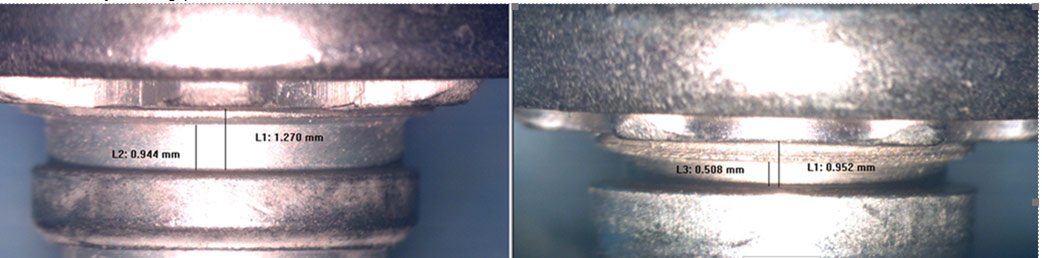
The problem traced back to the shaft and underhead geometry. The original dimensions created a stress point that gave way under normal use.
The failure reached far enough downstream to contribute to a delay in a major OEM vehicle rollout tied to a mid-cycle model refresh.
For a supplier working inside a scheduled automotive program, the defect put assembly commitments and the OEM launch date at risk.
solution
ENGINEERING COLLABORATION CORRECTS THE FASTENER DESIGN
Endries connected the customer’s engineering team with its manufacturing partner, identified the underhead stress point, and redesigned the part while preserving its clinching performance. Endries requested samples of the failed part and brought them to its manufacturing partner for review.
Root Cause Identified
The team traced the failure to the fastener’s underhead geometry, the area that carries the load once the
bolt is clinched into sheet metal. The original dimensions left a stress point that failed under normal use.
part redesigned
Endries and its manufacturing partner revised the shaft and underhead specifications to remove the stress
point while keeping the required clinching performance intact.
Multiple sample rounds
The redesigned fastener moved through several rounds of sampling. Endries kept the manufacturer and
customer engineering team in direct communication, reviewing results and refining the design after
each round.
Application Performance confirmed
The process continued until the fastener consistently performed as the vehicle application required.
transition & implementation
The project followed the Endries VMI Transition Checklist, ensuring each stage from setup through go-live, was structured and transparent. As data discrepancies surfaced, both teams treated them as opportunities to strengthen documentation and process discipline. Regular on-site collaboration and open communication helped achieve a smooth changeover without disrupting production.
Earning a new automotive supplier relationship after a failure like this does not happen quickly, and it shouldn't. It took roughly a year and a half of continued sample development and communication before the customer issued a purchase order for pre-production sampling, with a production purchase order to follow. Endries stayed engaged with the customer at every stage of that process rather than treating the early
sampling work as a one-time favor. That consistency, paired with the corrected fastener design, helped establish the performance and reliability needed to support ongoing production requirements.
Key Insights

Reliable Performance: Real-time monitoring and prompt replenishment keep production running smoothly.
Process Clarity: Verified data and clear
stocking procedures support accurate, efficient operations.

Collaborative Support: Dedicated local experts and weekly engineering presence turn technology into results.
results
The redesigned fastener and the relationship built around it delivered results the customer could measure:
New Business: The engagement opened new business between pre-production and production purchase orders.
Quality Performance: The corrected part continues to deliver consistent, reliable performance in production.
Root Cause Resolved: The underhead and shaft redesign eliminated the recurring head separation failure that had been affecting the application.
Supplier Relationship: What started as a request to fix a failed sample became an ongoing production supply relationship.
Conclusion
When a fastener design flaw is serious enough to affect a vehicle program, a replacement part is not a fix. It takes engineering work at the source of the failure and a distributor willing to stay engaged through a long qualification process. By correcting the shaft and underhead design and standing behind the part through production, Endries helped this automotive supplier resolve a quality issue that had been putting their business, and their customer's program, at risk.