
Total Cost of Ownership in Procurement
The Lowest-Priced Fastener Is Not Always the Lowest-Cost Fastener
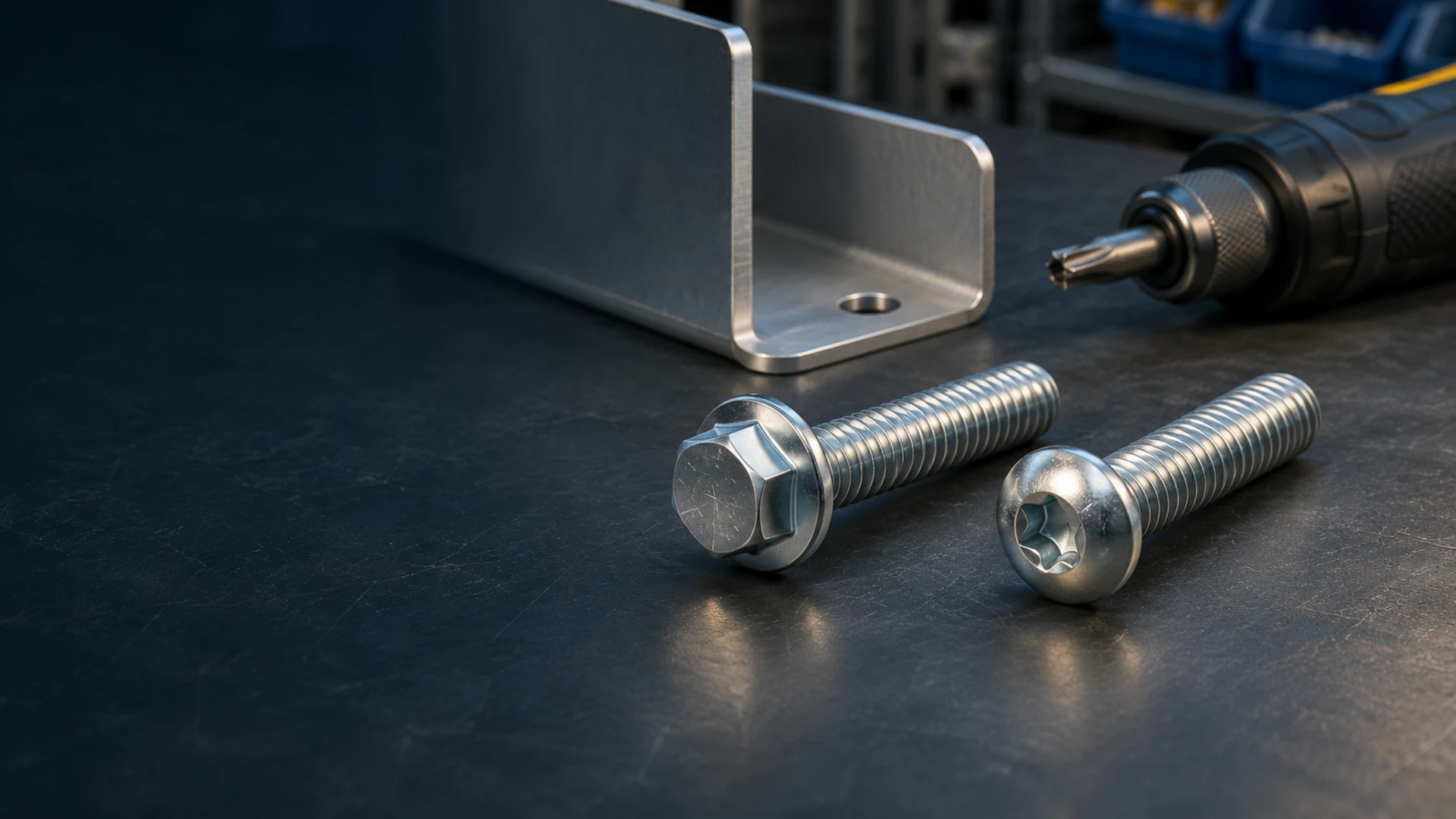
Why manufacturers should evaluate both Total Cost of Ownership and Lowest Total Installed Price
Quick answer: Total Cost of Ownership (TCO) measures every cost of buying, owning and using a component, not just its price. Lowest Total Installed Price is how Endries applies that thinking to fasteners: the full cost of getting a part into the finished assembly, including sourcing, inventory, handling, installation labor, quality and supply risk. A fastener that costs a penny more can still be the cheaper choice if it saves as little as one second of assembly time.
When manufacturers look for opportunities to reduce material costs, fasteners are an obvious place to start. There are thousands of them going into production every day, and even a small reduction in piece price can look meaningful when multiplied across annual volume.
The problem is that piece price tells only a small part of the story. A fastener has a cost long before it reaches the assembly line. Someone has to source it, order it, receive it, inspect it, store it, move it, replenish it and make sure it is available when production needs it. Once it reaches the line, there is still the cost of handling and installation. If the wrong part is selected or supply becomes unreliable, the costs can grow quickly through rework, expedites, downtime or quality issues.
Looking Beyond Piece Price
What is Total Cost of Ownership?
Total Cost of Ownership is a procurement framework that accounts for every cost of acquiring, owning, using and eventually disposing of a component. Applied properly, TCO can already include installation, quality and downtime costs. It is the broad lens.
For fasteners and Class-C components, those costs extend well beyond what appears on the invoice. They can include freight, receiving, inspection, inventory carrying costs, storage, purchase order processing, supplier management, material handling, replenishment, expedited shipments, obsolete inventory and the labor required to manage all of it.
The challenge is that these costs rarely sit neatly on the same spreadsheet.
Procurement sees the price of the component. Operations feels the effects of a shortage. The warehouse handles the inventory. Quality manages an issue when something goes wrong. Engineering gets involved when the application needs to change.
Individually, each expense may look small. Across thousands of components, multiple production lines and several facilities, they add up. The cost of the fastener itself is often one of the smaller pieces of the equation.
What is Lowest Total Installed Price?
Lowest Total Installed Price is Endries’ application of TCO thinking to one specific question:
What does this component actually cost by the time it is installed in the finished product?
A component does not create value for a manufacturer simply because it was purchased at a good price. Its value is realized when it is successfully installed into the product being built.
A PRACTICAL WAY TO THINK ABOUT IT
Lowest Total Installed Price = Component Cost + Supply Chain Cost + Inventory Cost + Handling Cost + Installation Cost + Quality and Risk Cost
That is why Endries looks at fastener cost from two perspectives: Total Cost of Ownership and Lowest Total Installed Price.
Endries uses Lowest Total Installed Price to apply TCO thinking to the cost of getting a fastener into the finished assembly. That includes the work that happens before installation, from ordering and receiving to stocking and line-side handling. A broader TCO review can also capture warranty exposure, obsolete stock, or disposal at program close when those costs matter.
What to count in a fastener cost comparison
| Cost category | What to include |
| Component | Quoted price at the required volume and any applicable price breaks. |
| Acquisition | Ordinary inbound freight, purchase order processing, supplier administration, and receiving. |
| Inventory | Average inventory value multiplied by your annual carrying rate. Add storage or obsolescence only if the rate excludes it. |
| Internal handling | Moving parts to the line and replenishing bins. Keep this separate from receiving and installation. |
| Installation | Measured assembly time per part at the loaded labor rate. Include tooling and qualification as separate one-time costs where applicable. |
| Quality and disruption | Scrap, rework, and documented shortage costs, such as premium freight or lost production. Record each cost once. |
The invoice is one input. Operations knows how long installation takes. Materials knows how much stock is held. Quality sees the cost of defects and rework. Finance can tell you which rates to use and whether a change would affect the budget. The comparison works when those inputs are visible to everyone reviewing it.
A One-Cent Savings Is Not Always a Savings
Consider two fasteners used in the same high-volume application. One costs $0.08. The other costs $0.09.
If the decision is based strictly on purchase price, the answer appears obvious. At one million units per year, the lower-priced fastener saves $10,000 in material cost.
Now consider the manufacturing process. What if the $0.09 component is easier to install and saves five seconds of assembly time?
At one million installations per year, five seconds represents nearly 1,389 hours of assembly time. At a loaded labor rate of $35 per hour, that is about $48,600 in labor. Subtract the extra $10,000 in part spend, and the modeled annual advantage of the higher-priced fastener is about $38,600, assuming all other costs are equal.
THE BREAK-EVEN POINT
At $35 per hour, a one-cent premium pays for itself if the part saves about one second per installation.
There is one important qualifier. Those 1,389 hours are recovered assembly capacity, not automatically cash in the bank. Each plant should decide how much of that time turns into a budget saving, how much becomes additional throughput and how much shows up as reduced overtime. That answer depends on the line, the schedule and the demand behind it.
The point is not that a more expensive fastener is always better. It is not. The point is that piece price alone does not tell you which fastener costs less.
Three costs that can change the recommendation
1. A lower price can mean more inventory
A price break may require a larger minimum order. Ask Materials how it changes average inventory, then ask Finance what it costs to hold that stock. Check replenishment lead time and how much inventory you could be left with if demand slows or the design changes. A smaller, more frequent refill may reduce inventory, provided it still covers the way the line uses the part.
Explore vendor-managed inventory for manufacturers ->
2. A quote can shift work to your plant
Compare who places orders, receives shipments, puts parts away, and refills the bin. A metal stamping and contract manufacturer was buying fasteners from 15 suppliers and still handling stocking internally. Endries helped consolidate the supplier base and introduced PULSE VMI. For a quote review, the question is which tasks move to the supplier and which still sit with your team.
Case Study: VMI and supplier consolidation ->
3. The part can change the work at the station
Ask Engineering and Operations whether a standard part, a different fastening method, or a kit changes handling, installation time, or rework. In one automotive application, Endries reviewed failed samples with a manufacturing partner, revised the fastener design, and refined it through sampling. If you’re evaluating a change, agree on the validation and approval steps before you count the benefit.
That is where sourcing and engineering begin working together. Endries engineers walk production lines, review applications and look for opportunities in fastener design optimization, SKU consolidation and standardization, custom assemblies, kitting, application testing and validation.
Explore fastener engineering services | Case Study: Automotive fastener redesign
The goal is not simply to reduce inventory. The goal is to have the right inventory available where and when production needs it.
Endries uses consumption visibility, inventory analytics, forecasting and replenishment strategies to help manufacturers find that balance, rather than optimizing one at the expense of the others. Inventory decisions become much easier when they are based on what a facility is actually consuming rather than what someone assumes it will consume.
How to Compare Two Fastener Quotes
Since these costs sit on different spreadsheets, the fastest way to compare two quotes is to bring the right people to the table. Gather each input from the team that owns it, and keep one-time costs separate from recurring costs so a tooling charge does not distort the annual picture.
| Input | Who provides it | Type | Quote A | Quote B |
| Piece price | Procurement | Recurring | ||
| Annual volume | Procurement | Recurring | ||
| Inbound freight | Procurement | Recurring | ||
| Order minimums and resulting avg inventory | Procurement | Recurring | ||
| Installation time per part | Operations | Recurring | ||
| Line-side handling time | Operations | Recurring | ||
| Scrap and rework history | Quality | Recurring | ||
| Shortage-related disruption (from documented stockout history) | Operations | Recurring | ||
| Tooling changes | Engineering | One-time | ||
| Part qualification and testing | Engineering and Quality | One-time |
When estimating disruption costs, use documented stockout history rather than worst-case assumptions. Real numbers make the comparison credible to finance and keep the conversation grounded.
There will always be pressure to find better material pricing. That is part of good procurement, and it should stay part of the conversation. The bigger opportunity is often found by widening the lens. That is the difference between simply negotiating part price and taking cost out of the manufacturing process.
From Purchase Price to Lowest Total Installed Price
For more than 50 years, Endries has worked with manufacturers on the fasteners and Class-C components that keep production moving. Today, that work extends well beyond supplying the part. It includes sourcing, inventory management, VMI, engineering support, supplier consolidation, data and analytics, kitting and other supply chain solutions designed to make the entire process work better.
OUR OBJECTIVE
Get the right components to the right place at the right time, reduce the work required to manage them and help customers achieve the Lowest Total Installed Price.
At the end of the day, the best fastener price is not necessarily the lowest number on the purchase order. It is the lowest total cost of putting that fastener into the finished product.
What Is Your True Installed Price?
Talk with Endries about taking a closer look at the cost behind your fasteners and Class-C components. We can help identify opportunities across sourcing, inventory, supply chain management, engineering and installation that piece-price comparisons often miss. Contact us at sales@endries.com or 800.852.5821 to schedule a no-pressure consultation.
Gain visibility. Reduce risk. Lower TCO.
Take our TCO flyer to discuss having a conversation with Endries.
Frequently Asked Questions
What is the difference between TCO and Lowest Total Installed Price?
TCO is the broad procurement framework covering every cost of acquiring, owning and using a component. Lowest Total Installed Price applies that thinking to one outcome: the full cost of getting a fastener installed in the finished product.
How much assembly time does a more expensive fastener need to save?
At a loaded labor rate of $35 per hour, a fastener that costs one cent more breaks even if it saves about one second per installation. Higher labor rates lower the break-even time.
Does saved assembly time always mean saved money?
Not automatically. Saved time is recovered capacity. Depending on the plant, it may become a budget saving, additional throughput or reduced overtime.
Does buying in larger quantities lower fastener cost?
It can lower piece price, but it also raises average inventory, carrying cost and the risk of obsolescence. The full comparison should include both sides.
Who should be involved in a fastener cost comparison?
Procurement for price, volume, freight and minimums. Operations for installation time and handling. Quality for scrap and rework. Engineering for any tooling or qualification costs.